
Mehmet Akif's Years as Civil Servant and Poet
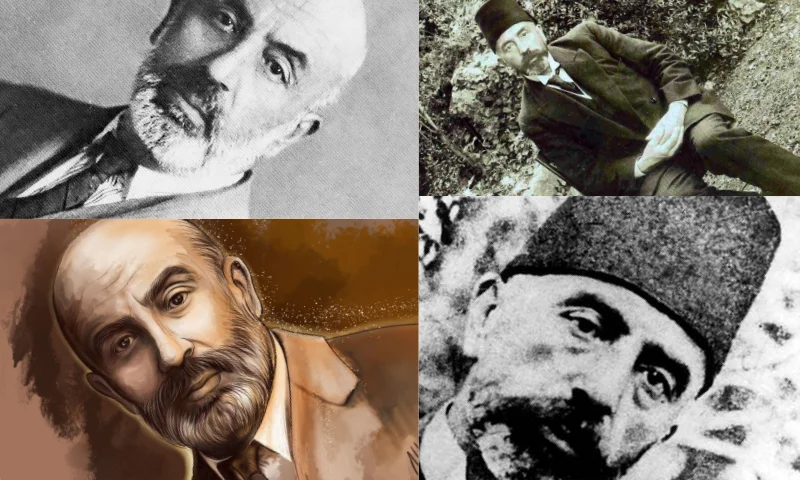
After completing his education, Mehmet Akif Ersoy started working as an assistant veterinary inspector at the Ministry of Agriculture. He held this position between 1893 and 1913. Due to his role as an assistant inspector, he visited places like Arabia, Albania, and Rumelia for inspection purposes. These visits allowed him to get to know the people more closely. Mehmet Akif Ersoy married İsmet Hanım in 1898. They had 5 children named Suadi, Emin, Tahir, Cemile, and Feride. Besides being an assistant veterinary inspector, Mehmet Akif also worked as a teacher. It is known that he taught Turkish Language in Istanbul during his years there. He also worked as a writer for many magazines and newspapers to share his interest in literature and poetry with people. He published articles in Servet-i Fünûn magazine and several other publications.
Mehmet Akif Ersoy's Political Life
Politically, Mehmet Akif Ersoy was an opponent of Sultan Abdülhamid II. During the years when the Second Constitutional Era was declared, Mehmet Akif was working as the Deputy Director of the Livestock Department. Mehmet Akif is known as a staunch enemy of Abdülhamid. In his own memoirs, he stated that he felt nauseous upon seeing Sultan Abdülhamid's face. Ten days after the declaration of the Second Constitutional Era, Mehmet Akif Ersoy joined the Committee of Union and Progress with a friend. With the support of the Committee of Union and Progress, Mehmet Akif began teaching Ottoman and Arabic literature. Mehmet Akif's membership in the Committee of Union and Progress allowed him to continue his publishing career. He is known to have been the chief editor of Sırat-ı Müstakim Magazine. After leaving this magazine, he started writing for Sebilür Reşad Magazine. These two magazines were where all of Mehmet Akif's poems were published. From the 1910s onwards, Mehmet Akif gave sermons in mosques and shared his views on the salvation of the nation. In his published writings, he is seen to advocate for Pan-Islamism. After the Balkan Wars, he visited Medina and Egypt. In 1914, Mehmet Akif decided to resign from his professorship due to his stance against the government. Afterward, he went to Berlin with a friend to spread the idea of Pan-Islamism. It is also known that Mehmet Akif was taken prisoner by the Germans during these years. After leaving Germany, Ersoy was assigned to counter-propaganda in Arabia, where he learned of the victory in the Battle of Çanakkale and wrote the work titled 'Çanakkale Destanı' (The Epic of Çanakkale). In 1918, Ersoy became the Chief Secretary of the Darül Hikmetil İslamiye Society. During his years working in this society, he continued to work for Islam.
The Years of the War of Independence and the Writing of the National Anthem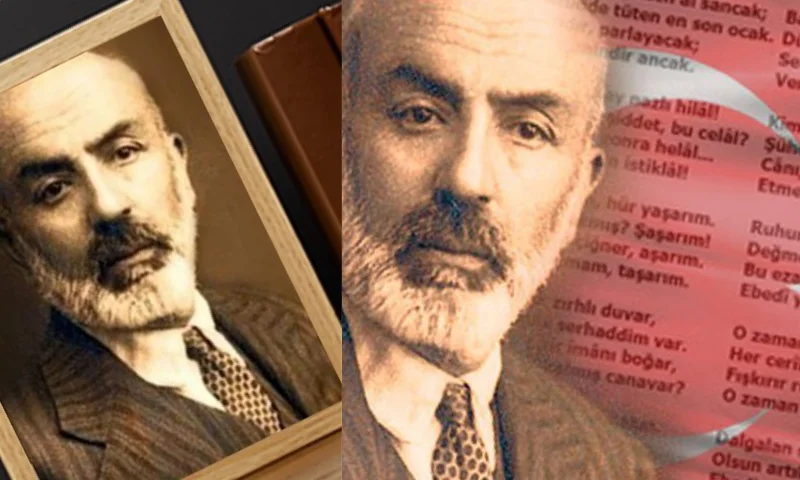
After the War of Independence began in 1919, Mehmet Akif Ersoy moved from Lebanon to Balıkesir, where he delivered sermons to the public to explain the situation. He then moved to Istanbul. After the Grand National Assembly was convened, he went to Ankara and, upon Mustafa Kemal's suggestion, entered the Assembly as the Deputy for Burdur. During this time, he also brought his family to Ankara. In the Assembly records, Ersoy is listed as the 'Poet of Islam'. Ersoy's role in the Assembly was to explain the necessity of the War of Independence to the people. In line with this, he went to Konya but was unsuccessful. Ersoy's most significant contribution to the Assembly was the magazine he published. These magazines had such a great impact that Russia banned the magazine from entering the country. During these years, Hamdullah Suphi Bey, the Minister of National Education, asked Ersoy to write a national anthem for the nation. Ersoy accepted this offer; his reason for not participating in the competition earlier was that he did not want to accept the prize of 500 TL. After writing the National Anthem, it was read in the Assembly by Hamdullah Bey and officially adopted as the National Anthem on March 12, 1921. He donated the prize money he received for the anthem to a foundation.
Mehmet Akif's Departure from the Assembly
Awarded the Medal of Independence for his achievements, Mehmet Akif resigned from his parliamentary position in 1922 due to health problems. Afterward, upon learning that his close friend Ali Şükrü, the Deputy for Trabzon, had been murdered by Topal Osman, the Commander of Mustafa Kemal's Guard Regiment, he began seeking a new homeland. In line with this, he started going to Egypt during the winter months each year. After losing his mother in 1926, he settled in Egypt permanently. Some have linked this move to the abolition of the Caliphate. In Egypt, he taught Turkish Language and Literature at a university. After the proclamation of the Republic, he reluctantly undertook the task of translating the Quran into Turkish but later terminated the agreement.
Mehmet Akif Ersoy's Return to Turkey and Death
After contracting cirrhosis in Egypt, Mehmet Akif Ersoy thought a change of scenery would be beneficial and went first to Lebanon and then to Antakya. Unable to recover, he returned to Egypt, and then went to Istanbul on June 17, 1936, for treatment. However, he did not recover and passed away on December 27, 1936, in the Mısır Apartment in Beyoğlu. His grave is in the Edirnekapı Cemetery. Mehmet Akif Ersoy has gone down in history as one of Turkey's most important poets.





