
Fiber Optic Sensor
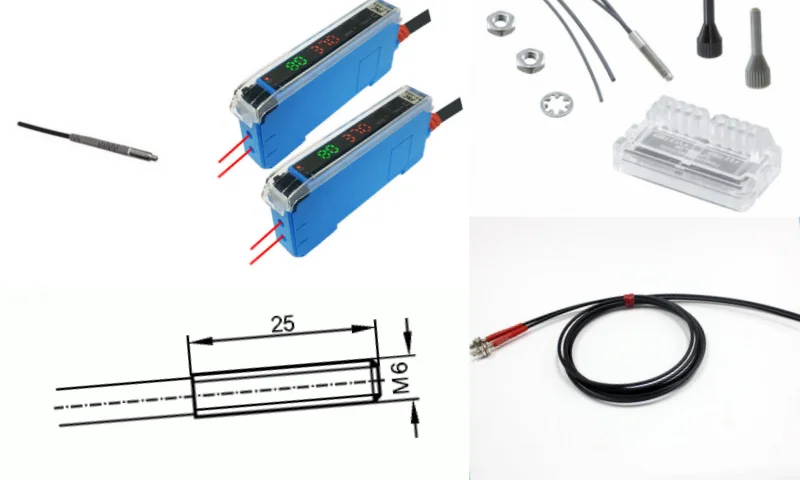
Fiber Optic Sensor Reflection Conditions
Fiber optic sensor devices are devices that convert light energy into electrical signals. Light is transmitted to distant places via fiber optic cables. On the related internet pages, you can find many types of fiber optic sensors with different light sources, response times, supply specifications, current consumption characteristics, operating modes, and control outputs, with the desired sensitivity settings, ambient lighting, sensitive to ambient temperature and humidity, and with different material and cable properties. Fiber optic sensor systems consist of a fiber optic cable connected to remote sensors. Inside the fiber optic cables, there is a total reflection system that provides light transmission. Thanks to this improved system, light energy can be transmitted to the farthest distances without loss. This total reflection principle returns and reflects light at the same angle it came from.
Fiber Optic Sensor Product Variety
There are 2 conditions required for this total reflection system.
- Critical Angle
- Cladding material density less than core material density
In fiber optic systems, power performance depends on the quality of the optical element. The algorithm of fiber optic sensors includes a signal processing center. The electrical signal in fiber optic cables is transmitted in the form of an optical signal and converted back from optical form to electrical signals at the end of the cable using semiconductors such as receiver photodiodes/phototransistors and PIN diode derivatives. Thus, digital and analog signals are transmitted. The signal sources in fiber optic systems are LEDs or laser diodes. Thus, data can be transmitted without power loss and interference.





