What Are Barcode Printers?
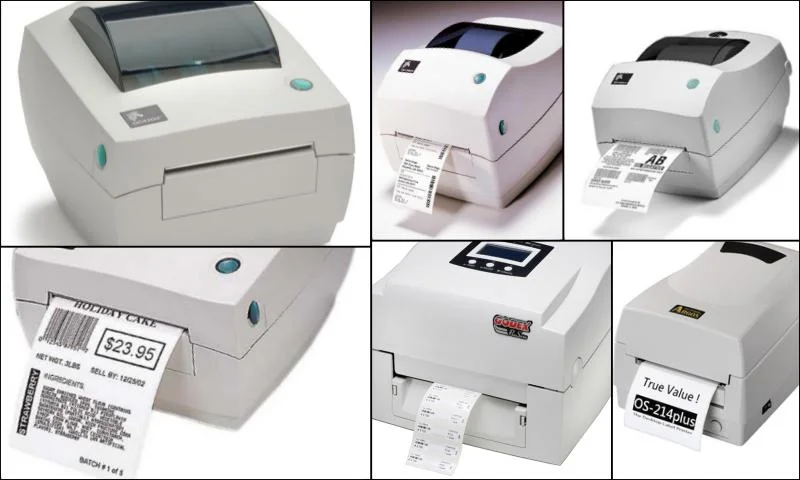
How Do Barcode Printers Work?
To fully understand how barcode printer models work, it is essential to know how other different industrial barcode printer products work. Needle printers generally perform printing operations by hitting ink on their ribbons onto paper with needles. Deskjet, or inkjet printers, print by spraying ink onto paper. Laser printers, which use toner, operate differently from the above printers and generally perform printing operations by electrically spraying toner onto paper. Thermal or thermal transfer printers are printers that print by burning, and in industrial barcode printers, similar to fax machines, printing is achieved by the print head directly burning the paper or by an intermediate material that sends heat, namely carbon ribbons called ribbons, coloring the paper. Based on these, there are many different reasons why barcode label printers are preferred. These include the fact that any smudging or problems in the prints are minimized because industrial barcode printer devices work by burning. Thus, a high print quality is achieved. They also have the ability to print on special labels that normal printers cannot print on, such as labels with glossy surfaces, nylon-like labels, washing instruction fabric, etc. At the same time, barcode printing support is easier and free compared to other printers.
What Are The Printing Methods In Barcode Label Printers?
There are 2 types of printing methods in industrial barcode printer systems: direct thermal printing and thermal transfer printing systems. In direct thermal printing systems and methods, printing operations are performed quickly and easily on suitable labels without using any consumables. Labels printed with direct thermal printing systems include thermal fax paper and cash register rolls, etc. Labels printed in this manner are absolutely not affected by light, humidity, etc. in their environments. Since the labels have a short lifespan, they are preferred for temporary uses. Courier companies, cargo, and shelf labels in supermarkets are examples of such labels. A thermal label, initially white, will gradually start to yellow, turn brown, and eventually turn black. In thermal transfer printing systems, printing is done on labels suitable for direct thermal printing methods using consumables called ribbons. Labels printed with the thermal transfer printing method include vellum, sivermat, Japanese non-fading paper, coated paper, PP, PE, coated cardboard, etc. Labels printed with these methods are absolutely not affected by adverse conditions such as light, heat, humidity, etc. in their environments, and prints made on coated paper or vellum labels are limited with substances like water, cologne, etc., if a ribbon is used. Depending on the characteristics of the labels to be used in thermal transfer printing methods, correct printing is achieved when a suitable ribbon is used.